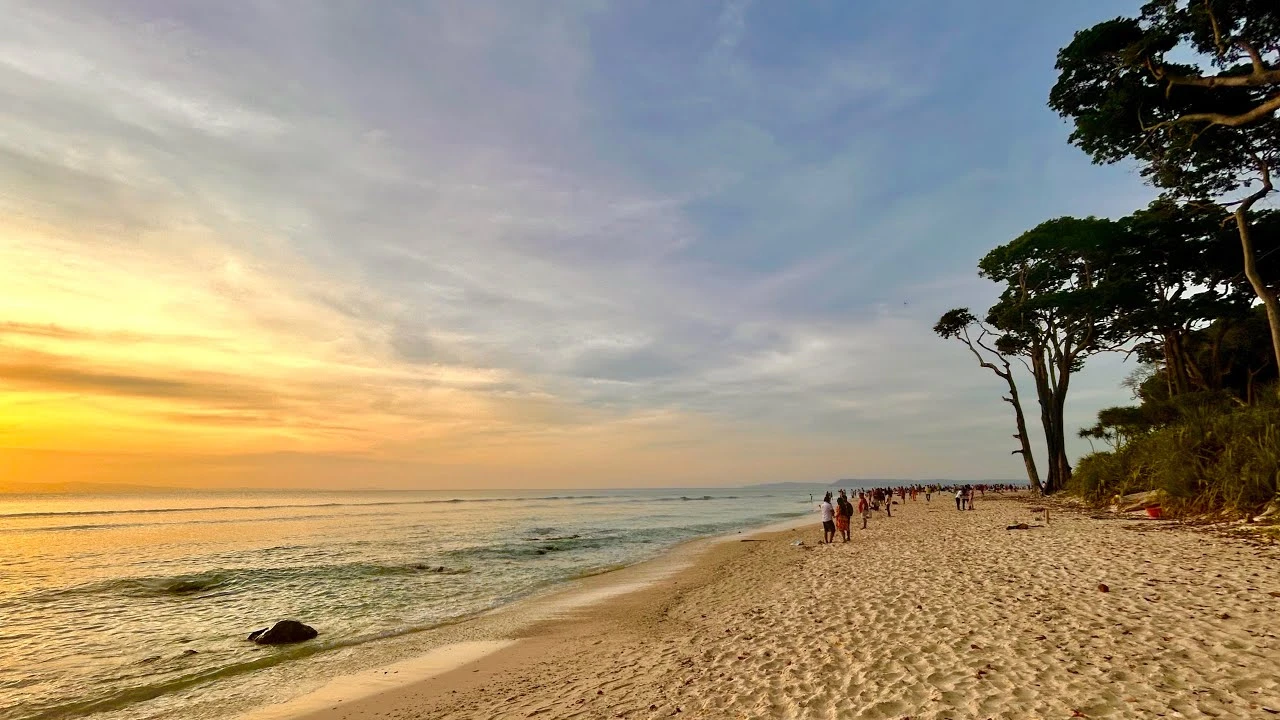
The Andaman Islands are among the few existing places in India where nature continues to reign over urban civilisation. The islands are the kind of paradise to the traveller who does not mind the scenery as much as the nightlife, especially due to thick tropical forests, mangrove creeks, rare marine biodiversity, limestone caves and untouched beaches. There will be no over-crowded promenades, skyscraper skylines, but rather solitary beaches, fishing villages and national reserves with ecosystems that are not very disturbed. Andaman Island does not mean speeding up the sightseeing, instead it is a place to explore slowly, with birds calling in the sunrise, plankton glowing at night in the dark, turtle nesting beaches and forest hiking trails.
Most experiences in this area are reliant upon tides, light and weather, and therefore, patience is involved in the journey. Go out on a beach when the tide is low, and you can see little reef animals; or sit watching a creek of mangrove and see the kingfishers and crabs coming out of the roots. The islands also have their change of character day to day: mornings are calm and have soft light, afternoons are used to show the colours of the coral lagoon,s and evenings have dramatic sunsets on the horizon. The travellers are bound to rediscover the rhythm of nature with little commercialization and strict conservation areas. The list of the most beautiful natural locations was expanded, and what you can actually experience in each of them is represented below.
Top Places of the Andaman Islands
Havelock Island (Swaraj Dweep)
The ideal compromise between jungle and sea is Havelock, where tropical vegetation grows literally to the white sand beaches. Instead of markets in the city, nature lovers will spend days in this area in a forest trail, mangrove creeks, coral reefs and so on. Radhanagar beach has a wide open beach where one can walk during the sunrise and take photos of the sunset, while Elephant beach has shallow reefs where fish can be seen even close to the shore. Night kayaking shows the bioluminescent plankton in specific months. You may also bike along the village roads and observe birds, butterflies, and monitor lizards in their natural habitat. Nevertheless, huge expanses are green and undisturbed despite their popularity.
What You Can Do
- Forest walks & cycling
- Snorkelling & kayaking
- Sunset photography
- Bioluminescence viewing
Best Time: October – May
Neil Island (Shaheed Dweep)
The town of Neil Island seems to be a languid seaside village in lagoons. The geological feature of the island is the natural rock bridge created by the erosion of waves, and it can be seen best during low tides when undersea creatures can be seen in tidal pools. Bharatpur Beach has shallow, calm waters where people can do leisurely swimming, and Laxmanpur Beach has expansive sunset views. Agricultural fields in the island, palm trees and silent roads make the atmosphere on the islands quite serene and one that is hardly experienced in tourism locations. Tourists usually hire bicycles to travel at their own speed and see sea stars and small reef animals along the coastline.
What You Can Do
- Tide pool exploration
- Lagoon swimming
- Cycling across villages
- Sunset walks
Best Time: November – April
Baratang Island
Baratang provides one of the most peculiar sceneries in the Andaman Islands. It goes through deep rainforest and then to the small waterways of the mangroves, which are navigated by small boats. The end is a natural system of limestone caves that was formed over thousands of years due to the mineral deposits. The structures are in the form of pillars, and ice falls within a cool cavern. Geological peculiarities are supplemented by mud volcanoes. It is more of a nature adventure than a sightseeing excursion and would suit those travellers who are more interested in ecosystems and earth formations as opposed to beaches.
What You Can Do
- Mangrove boat ride
- Cave exploration
- Geological photography
- Forest journey experience
Best Time: November – April
North Bay & Jolly Buoy
These islands are found within a marine national park, and this makes the water within it one of the clearest in India, owing to stringent conservation laws. Plastic is limited, and the number of visitors is restricted on a daily basis. Coral reefs start a few meters off the shore, enabling even the inexperienced to view marine biodiversity comfortably. Glass-bottom boats have the benefit of showing you colourful coral gardens without having to go into the water. The forested islands that are located around the lagoon provide scenic beauty to the lagoon. The environment in the ecosystem here is one of the healthiest reefs in the country, perfect for nature field trips.
What You Can Do
- Coral observation
- Snorkelling
- Marine photography
- Eco tours
Best Time: December – April
Ross & Smith Island (Diglipur)
It is these two islands that are united by a natural white sandbar that is only seen when the tide is low, thus making two totally different conditions of the sea on both ends - one smooth lagoon and one full open ocean. The place is not spoiled by the limited entry permits and few visitors. The forest around is home to the birds and coastal growth. The experience of walking through the sandbar in the midst of turquoise water is a rare geographical experience. It is a good place to have a picnicinh peace, take photographs and swim in shallow, crystal clear water without congestion.
What You Can Do
- Sandbar walk
- Swimming
- Bird watching
- Remote island relaxation
Best Time: December – April
Mount Harriet National Park
Mount Harriet has the most green scenery in South Andaman. A thick evergreen forest is on rolling hills and has vistas of the other surrounding islands. Hiking dromads traverse butterfly reserves and nesting places of birds. This is where the opinion is printed on the 20 Indian currency note. Temperatures are lower in contrast to beach locations, as well as the surrounding is silent besides the natural sounds. It is among the most preferred destinations in the Andaman by hikers and wildlife watchers who would like to explore the islands outside the coastline.
What You Can Do
- Trekking
- Bird watching
- Butterfly spotting
- Hill viewpoints
Best Time: October – March
Diglipur
The most untouched part of the Andaman is Diglipur Island, and it is the place that is totally contrasted with Port Blair. The region hosts the highest point of the islands in the form of the Saddle Peak, some unknown Alfred caves and seasonal turtle nesting beaches at Kalipur. This is because the long travel keeps the number of tourists down, thus protecting natural beauty. Tourists who visit here usually spend the night to have a glimpse of the sunriseonn calm beaches and thick forest paths. It is perfect among nature travellers who are serious and are ready to venture out of the usual paths.
What You Can Do
- Trek to Saddle Peak
- Turtle nesting observation (seasonal)
- Cave exploration
- Remote beach walks
Best Time: December – March
Long Island
Long Island is a lesser-known tourism destination whose tourism infrastructure is minimal. There are thick mangrove forests around those quiet beaches, and the transport is usually byboats. Lalaji Bay, which is fully undeveloped and can be accessed either via forest trail or boat, is an attraction on the island. The atmosphere is filled with silence, with the exception of birds and waves. It is the right place to be for the traveller who wants to be isolated and travel more slowly than following sightseeing lists.
What You Can Do
- Mangrove exploration
- Forest trail hiking
- Beach camping style relaxation
- Bird watching
Best Time: November – April
Chidiya Tapu
Chidiya Tapu is a place in close proximity to Port Blair, which is known as a diverse bird area with excellent sunsets. There is a little forest path that leads to a cliff where one has a view over the open sea. In the early-morning time, a lot of endemic birds may be seen in thick trees. Evenings have golden skies which bounce on the water. It is among the simplest nature escapes that do not require travelling long distances out of the capital.
What You Can Do
- Bird watching
- Sunset photography
- Nature walks
- Short trekking trails
Best Time: October – May
How to Reach Andaman (Port Blair) from Major Indian Cities
| City | Mode | Duration | Typical Route |
| Delhi | Flight | 4.5 – 5.5 hrs | Direct / via Kolkata or Chennai |
| Mumbai | Flight | 5 – 6 hrs | Direct / via Bengaluru or Chennai |
| Kolkata | Flight | 2 – 2.5 hrs | Direct flights (most frequent) |
| Chennai | Flight | 2 – 2.5 hrs | Direct flights (shortest route) |
| Bengaluru | Flight | 2.5 – 3 hrs | Direct flights available |
Note: Sea ships also operate from Chennai, Kolkata and Visakhapatnam, but take 3–4 days and are chosen mainly for experience rather than convenience.
Best Time to Visit Andaman Islands
| Season | Months | Weather | Sea Conditions | Best For | Travel Advice |
| Winter (Peak Season) | October – February | Pleasant (20–28°C) | Very calm & clear | Sightseeing, beaches, scuba diving, snorkelling | Ideal time to visit, booking recommended |
| Early Summer | March – April | Warm (25–32°C) | Clear visibility | Water sports & island hopping | Good balance of weather & crowd |
| Late Summer | May | Hot & humid (28–34°C) | Mostly calm | Budget travel, fewer tourists | Carry sunscreen & hydrate well |
| Monsoon | June – September | Rainy & windy | Rough sea | Lush greenery, off-season travel | Many water activities are closed |
| Post Monsoon | Late September – Early October | Fresh & green | Improving sea clarity | Nature photography, peaceful travel | Good time before peak crowds |
Tip: For marine visibility and water activities, October to April is considered the best overall travel window.
Essential Tips for Travelling to the Andaman Islands
- Book flights and hotels in advance during peak season (Dec–Feb and long weekends)
- Keep one buffer day in your itinerary for ferry or weather delays
- Avoid covering too many islands in a short trip to prevent travel fatigue
- Carry printed and digital copies of ID proof and tickets
- Download maps, bookings and important documents offline due to a weak network
- Pack light cotton clothes suitable for humid weather
- Carry reef-safe sunscreen, sunglasses and a hat
- Bring flip-flops and one comfortable walking shoe
- Use a waterproof phone pouch and dry bag
- Carry personal medicines, as pharmacies are limited on smaller islands
- Keep mosquito repellent for evenings and mangrove areas
- Stay hydrated throughout the day
- Avoid heavy meals before boat rides to prevent motion sickness
- Inform instructors about medical conditions before activities
- Never touch corals, shells or marine animals
- Follow safety instructions during water sports
- Ferry schedules may change depending on tides and weather
- Internet speed is slow outside Port Blair, plan minimal online dependency
- Carry sufficient cash, as ATMs are limited on remote islands
- Rent scooters responsibly and carry a valid driving licence
- Avoid plastic and carry reusable water bottles
- Respect tribal reserve areas and restricted zones
- Avoid loud music on beaches and in forests
- Support local guides and eco-friendly operators
- Do not litter, keep beaches clean
- Start activities early morning for calm sea conditions
- Plana day early, as sunsets happen around 5–5:30 PM in winter
- Seafood is fresh,h but vegetarian food is widely available
- Keep flexible timing, island life moves more slowly than mainland cities
Embrace Slow Travel in the Andaman Wilderness
For nature lovers, the Andaman Islands feel less like a tourist destination and more like a living ecosystem where every island reveals a different personality. Some offer coral gardens beneath clear water, others hide mangrove tunnels, limestone caves, hill forests or silent turtle nesting beaches. This diversity allows travellers to experience many landscapes within one journey rather than visiting just another beach location.
Travel slowly, respect conservation rules, and keep gaps between destinations instead of rushing through an itinerary. Wake early for bird calls, explore low tide shores, and watch sunsets without distractions. The islands reward patience; the longer you stay still, the more you notice. From drifting leaves in mangroves to reef fish near the shore, nature quietly reveals itself. Avoid littering, minimise plastic use, and support eco-friendly operators to help preserve this fragile environment. With mindful travel, the Andaman Islands become more than a holiday; they become a reminder of how untouched nature feels when allowed to exist peacefully.
Categories
Recent Post
Best Places to Visit in Andaman for Backpackers
Apr 09, 2026
The Gateway to Total Health, Happiness & Precision Healing in Andaman Islands
Mar 16, 2026
Best Places to Visit in Andaman for Couples
Feb 20, 2026
Best Places to Visit in Andaman for Nature Lovers
Feb 17, 2026
Water Activities Every Adventure Traveller Should Try – Complete Water Sports Guide
Feb 17, 2026Frequently Asked Questions
Yes, there are remote or secluded islands which need entry permits locally issued. These regulations can manage the tourist activities and save delicate ecosystems. They are normally pre-arranged by your tour operator or hotel.
Observation of wildlife is more about patience than chance. Waking up early will result in more opportunities to see birds, crabs, reptiles and butterflies. There are a few large animals, but the islands are well endowed with smaller endemic animals.
Certainly, most places are devoted to forests, panoramas and rocks rather than to the sea. Caves and mangrove trails are a good option that does not require one to get into the water. Nature travellers can spend entire days exploring the land.
There is typically at least a 6-8 day requirement when it comes to a relaxed nature itinerary. This will give the time to explore the South and North Andaman areas at leisure. High speed through islands won’t ensure an opportunity to see wildlife and landscapes in the right way.
They are both special yet with varying moods. The light at sunrise is soft and still, and gives rise to the actions of the birds, whereas the sunset offers some dramatic colours and broad sweeps of scenery. Most travellers want to enjoy the two on different beaches.
Yes, the islands can be considered to be safe, as a rule to solo travellers. It is advisable to stick to the local counselling and not to go to lonely places at night. In the forest and remote areas, guided tours are useful.
Yes, there are seasonal changes on the island. During winter, there are clear skies with blue water, whereas the monsoon makes the forests greener and more colourful. Photographers tend to select timing according to the favourable colours of the landscape.
There are very few tourist spots where photography is not allowed. But not all the tribal reserve lands and parts of the restricted conservation areas allow cameras. It is important to always verify instructions in the locality before shooting pictures.
In most places, camping is limited to save wild animals and nesting places. Overnight stays are only permitted by permission in some approved locations. Camping can lead to fines.
Yes, walking tours are held by local eco-guides and naturalists in forests and coastal areas. Such walks make travellers learn more about flora, fauna and local ecology. Hiring a guide makes it very enjoyable.